Attic mold in Tampa almost always comes from one of a few moisture sources: a roof leak, an air handler drain line that backed up, an exhaust fan venting into the attic, or blocked ventilation. Removal means fixing that source, pulling out moldy insulation, cleaning or replacing affected wood, and keeping the spores out of the rooms below. Call the number on this page to be connected with a local mold remediation company in Tampa.
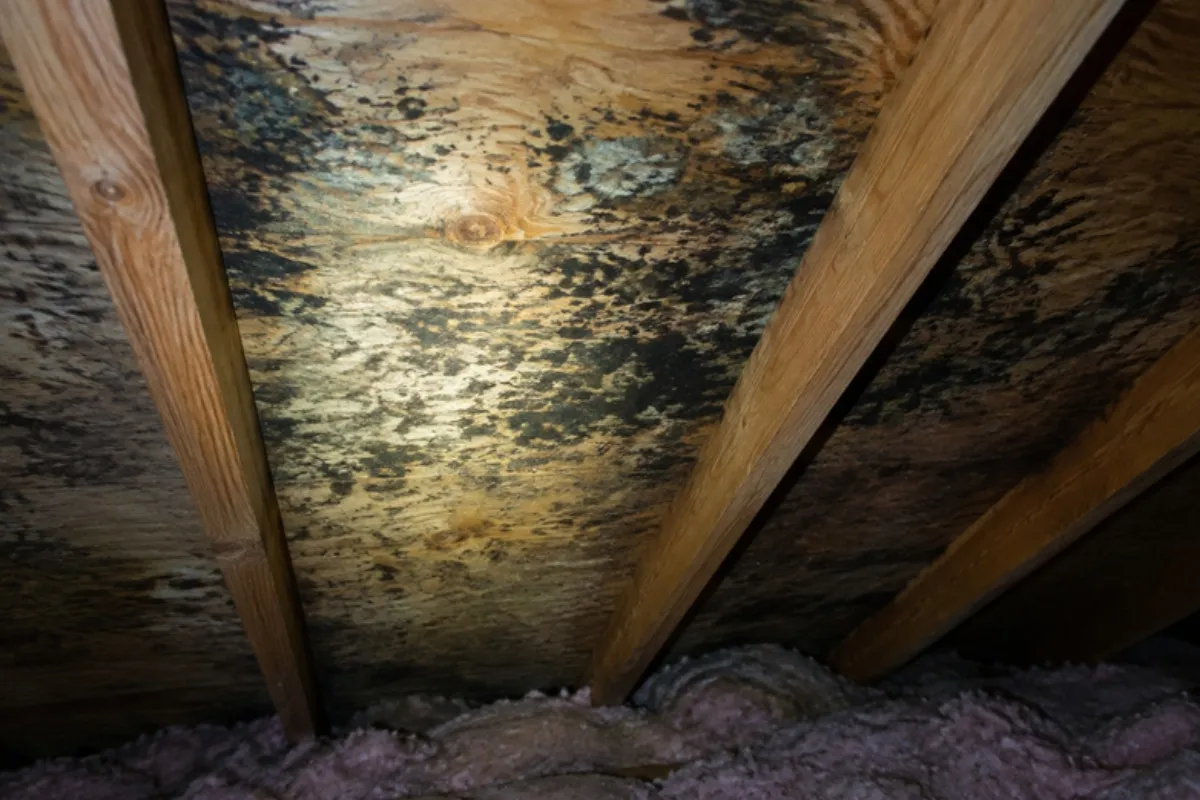
Why Tampa attics grow mold
A Tampa attic sits under a roof that bakes most of the year, takes heavy summer thunderstorms, and faces hurricane season from June through November. Attic mold here almost always traces to one of these:
- Roof leaks around flashing, vents and storm-lifted shingles. Stains often show on the decking long before the ceiling below.
- The air handler and condensate line. Many Tampa homes have the AC air handler in the attic. A clogged drain line or rusted pan can soak nearby insulation and framing for weeks unnoticed.
- Bathroom or dryer exhaust that ends in the attic instead of outdoors.
- Blocked soffit vents or insulation packed against them, trapping humid air.
- Sweating ductwork where cold supply ducts meet hot, humid attic air.
What to look at before you call
If you can get into the attic safely, use a flashlight on the underside of the decking near vents and valleys, the air handler drain pan, and insulation around duct boots. Dark spotting on plywood, matted or damp insulation, rusty nail tips and a musty smell are the usual clues. Take photos, stay on the joists, and don't scrape the growth to see it better. EPA advises keeping AC drain pans clean, drain lines flowing, and indoor humidity below 60 percent.
Who does what under Florida law
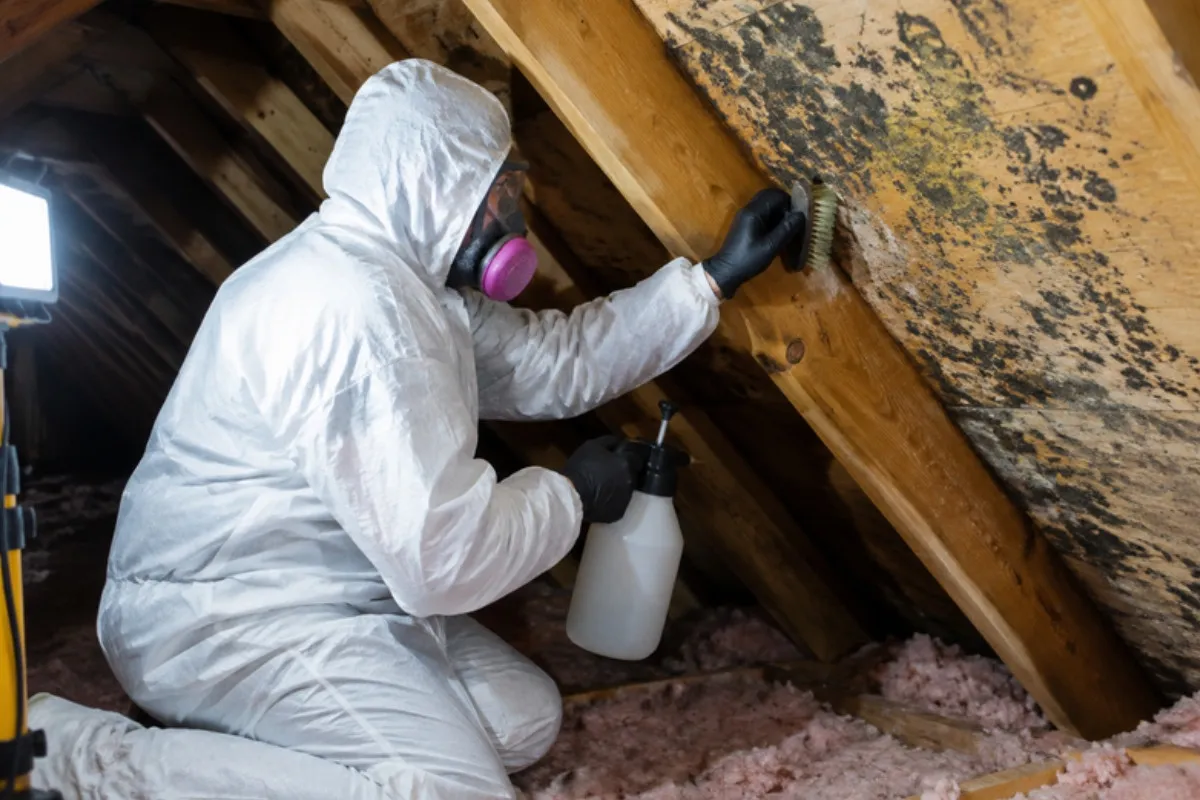
Under s. 468.8419, a company that assesses a structure can't remediate that same structure within 12 months, and the reverse also applies. If you want an assessment and written scope first, expect it from a mold assessor with a state mold assessor license, and the removal from a separate company that holds a Florida mold remediator license. Check either one on DBPR's online licensee search. For visible attic growth, EPA notes that sampling is usually unnecessary.
How the job usually goes
- Fix the moisture source first: roof repair, drain line, rerouted exhaust, or ventilation. Otherwise the mold returns.
- Contain the attic access so disturbed spores don't fall into living space. If the air handler or ducts are involved, keep the HVAC off, as EPA advises.
- Bag and remove moldy insulation. It is porous and generally can't be saved.
- Clean decking and rafters, typically by HEPA vacuuming, scrubbing or media blasting, then dry them. Rotted decking gets replaced, usually by a roofer.
- Reinstall insulation once the wood is dry.
A coating sprayed over growth is not a substitute for cleaning. EPA says not to paint or caulk over mold.
What it costs
Angi reports attic mold remediation in Tampa typically runs $1,075 to $4,300. The total depends on how much decking is affected, how much insulation comes out, how cramped the attic is, and whether roof or air handler repairs are needed, which are usually billed separately.
Attic Mold Removal questions from Tampa homeowners
Can attic mold get into the rest of my Tampa house?
Does attic mold mean my roof needs replacing?
Should I get the attic tested first?
Is attic mold remediation covered by insurance?
Related mold services in Tampa
Attic Mold Removal in nearby cities and towns
Hillsborough County
Pinellas County
Pasco County
Manatee County
Sarasota County
Polk County
Sources
Last updated: